
Prostate Volume Calculator
Estimate prostate volume and PSA density from ultrasound or MRI measurements — built for clinicians, radiology trainees, and patients reviewing their own reports.
Enter measurements from ultrasound or MRI to calculate volume instantly
From ultrasound report to volume estimate in under a minute.
Why volume is estimated from geometry rather than measured directly.
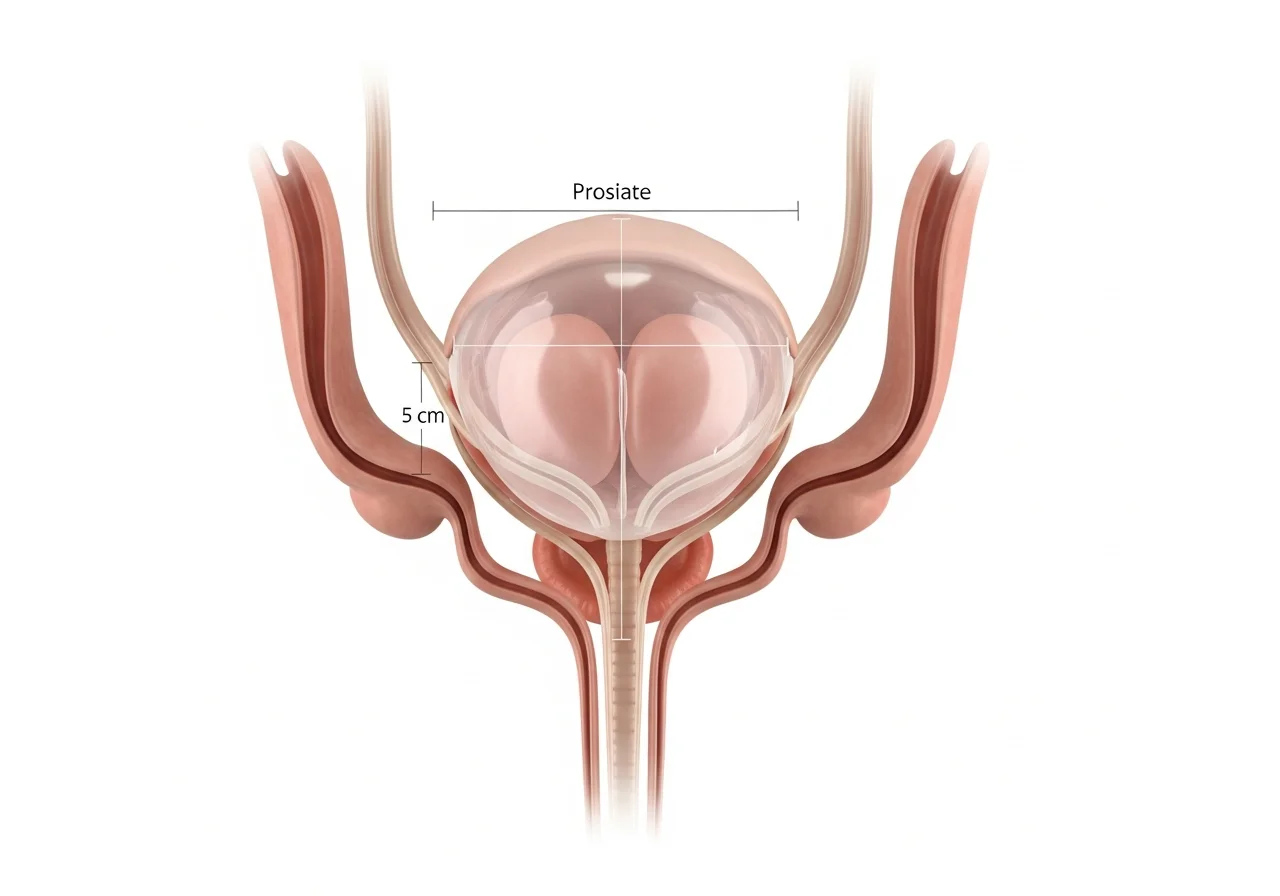
The prostate is approximated as a prolate ellipsoid — a rounded, egg-like shape — because measuring its true volume directly during imaging isn’t practical. By capturing three simple linear measurements from an ultrasound or MRI, the ellipsoid formula converts them into a volume estimate that correlates closely with actual gland size.
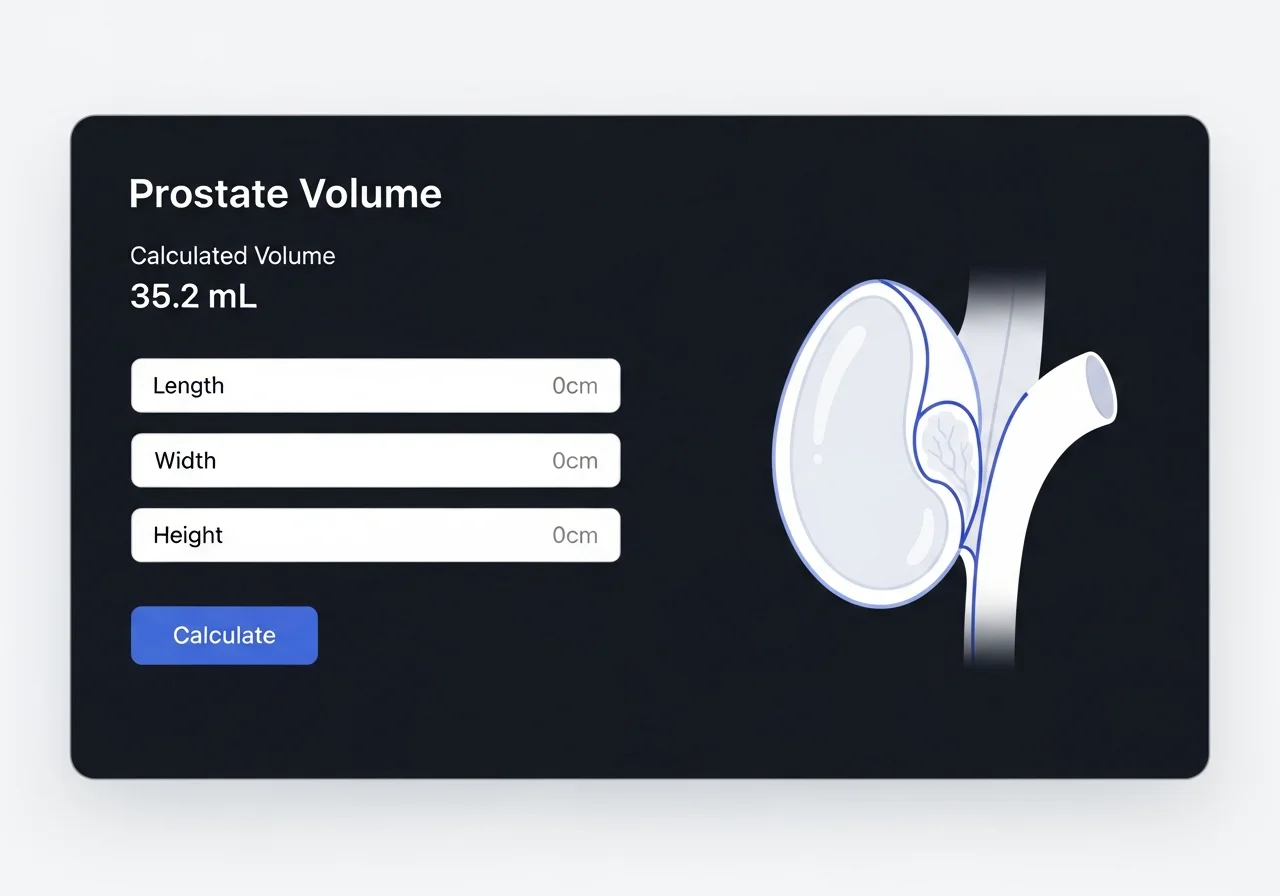
This geometric approach has been validated against pathology specimens for decades and remains the standard used in urology and radiology practice, precisely because it is fast, reproducible, and doesn’t require any additional equipment beyond the imaging already being performed.
Two formulas, and the size of the gland decides which one fits better.
Ellipsoid Formula
V = L × W × H × π/6 (≈0.523). The standard choice for most glands and the formula this calculator uses by default. Well validated, with a correlation of r≈0.89 against pathology specimens, though it tends to systematically underestimate true volume by roughly 17%.
Bullet Formula
V = L × W × H × 5π/24 (≈0.654). Most references recommend switching to this formula for glands smaller than 55 mL, where it tracks true volume more closely than the standard ellipsoid formula.
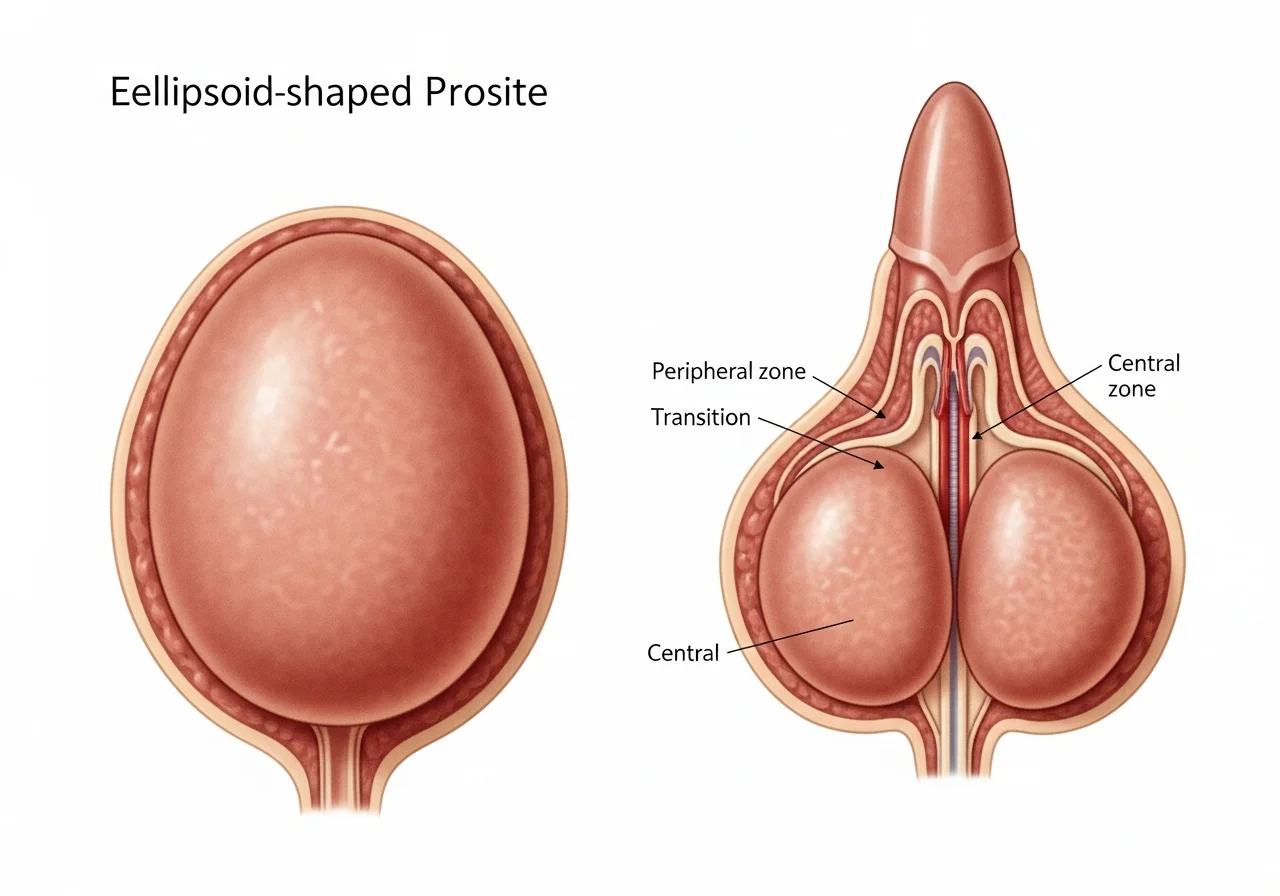
Rule of thumb: use the ellipsoid formula above 55 mL, and consider the bullet formula below that threshold if your reference range specifies it.
Accuracy depends heavily on how the three dimensions were captured.
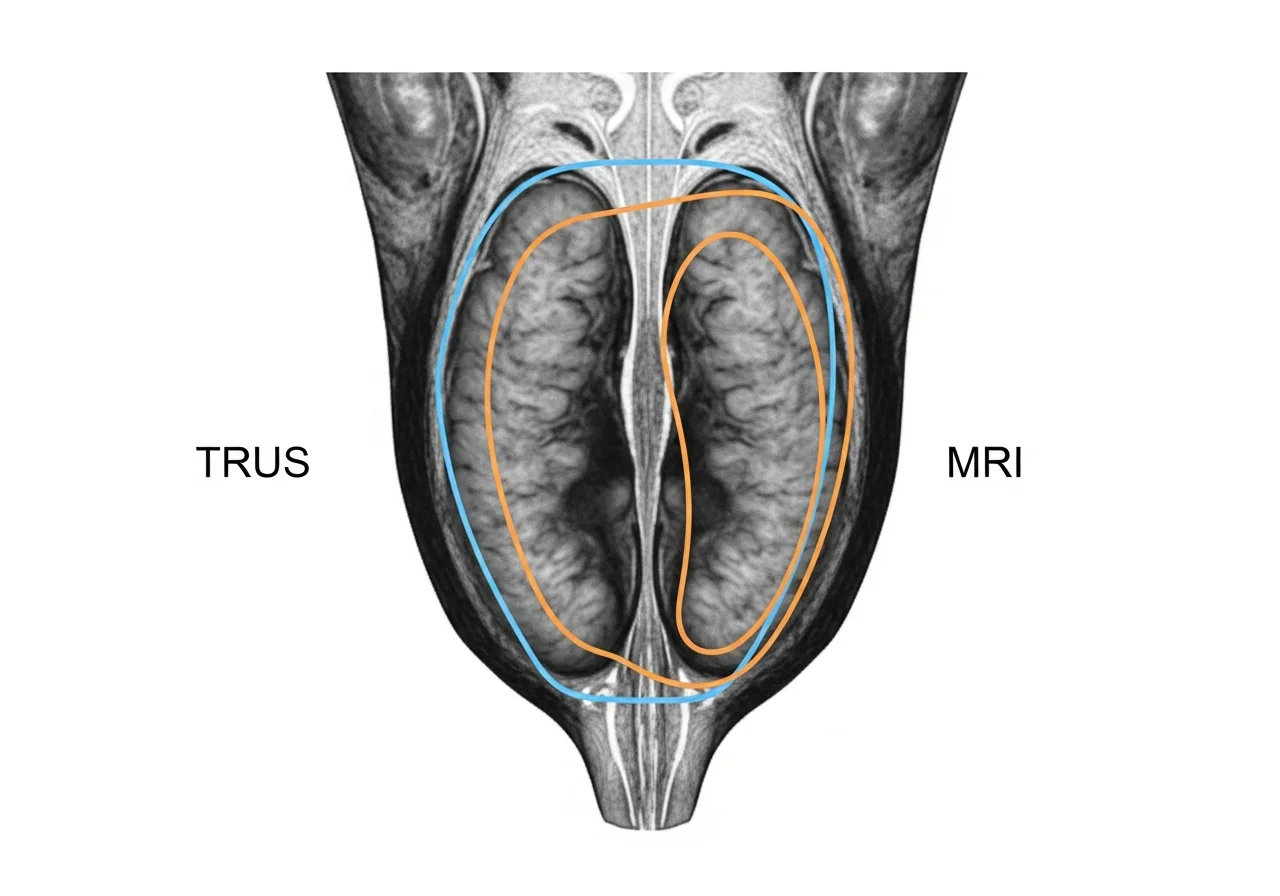
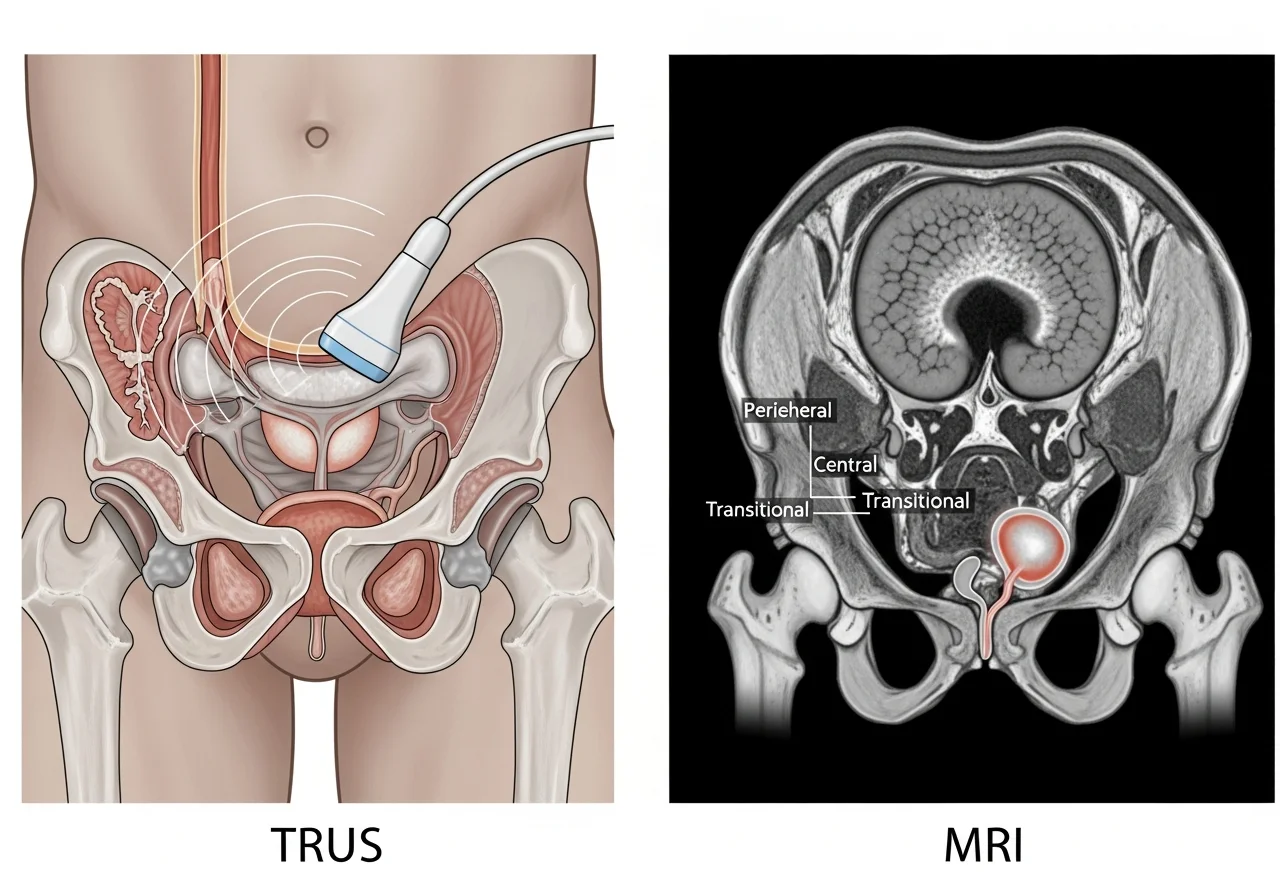
Transrectal Ultrasound (TRUS)
The most accessible and widely used method, giving real-time imaging during a routine visit. Reliability studies place its intraclass correlation (ICC) around 0.71 — solid for routine use, but more operator-dependent than MRI.
Multiparametric MRI
Offers higher anatomical detail and better boundary visualization, with an ICC around 0.91. Not needed for routine checks, but preferred when a more precise or complex evaluation is required.
For a deeper dive into how these two methods compare, including clinical use cases, see our full guide: Prostate Volume Measurement: TRUS vs MRI Accuracy, Clinical Use, and Calculator Guide.
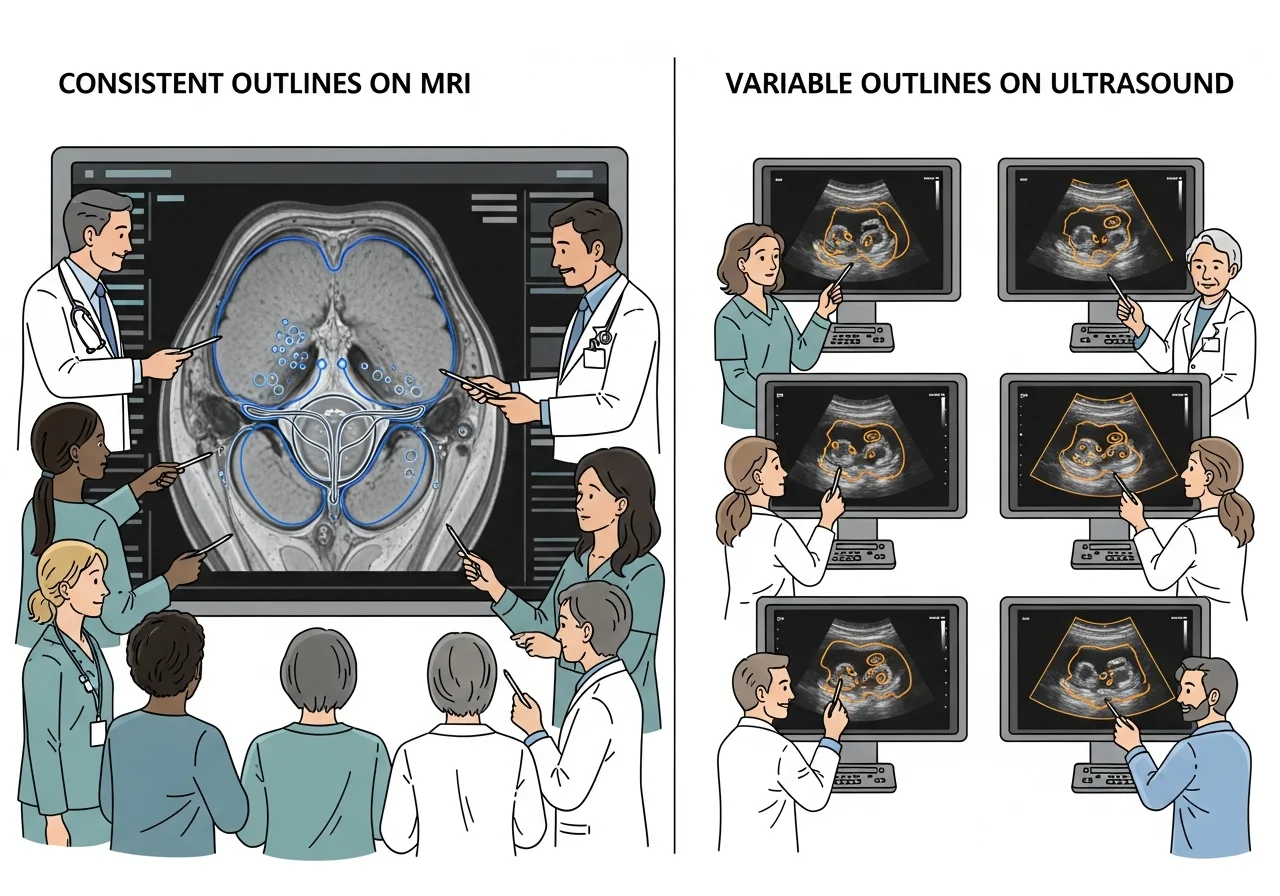
The same gland, measured twice, rarely gives the exact same number — and that’s normal.
Small differences between two measurements of the same prostate, or between two different observers, are expected rather than a sign of error. This is why consistency in technique matters more than chasing a single perfect number: using the same imaging method and measurement approach at follow-up reduces variability far more than repeating the calculation.
A single PSA number means very little without knowing the size of the gland producing it.
PSA density (PSAD) divides the serum PSA value by the calculated prostate volume — PSAD = PSA ÷ Volume — correcting for the fact that larger glands naturally produce more PSA even without disease. This calculator computes it automatically the moment a PSA value is entered alongside the three dimensions.
Biopsy triage: PSAD thresholds around 0.07 ng/mL/cc have been shown to reduce unnecessary biopsies by close to 20% while still catching clinically significant disease.
Active surveillance: a PSAD under 0.15 ng/mL/cc is commonly used as one criterion supporting active surveillance eligibility.
PSAD is most useful exactly where plain PSA numbers get ambiguous — borderline results, or PI-RADS 3 lesions on MRI where imaging alone doesn’t give a clear answer.
Size alone never makes a diagnosis, but it shapes how everything else is read.
Benign Prostatic Hyperplasia (BPH)
Gradual enlargement is the hallmark of BPH. Tracking volume over successive visits helps gauge whether a treatment plan is working or whether symptoms are likely to keep progressing.
Prostate Cancer
Cancer doesn’t always correlate with overall gland size, but volume still plays a supporting role — mainly through PSA density — in risk stratification and deciding whether further workup is warranted.
The questions people actually ask about this calculator.